
 English
 Spanish
 French
 German
 Italian
 Chinese (Simplified)
 Japanese
 Korean
 Arabic
 Portuguese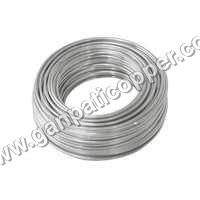
Enamelled Aluminium Wire
350 INR
Product Details:
- Features Lightweight, High Electrical Conductivity, Good Adhesion of Enamel, Uniform insulation
- Outer Diameter Depends on insulation
- Usage & Applications Motors, Transformers, Electrical Coils, Solenoids, Relays, Winding Applications
- Thickness Standard by Gauge
- Material Aluminium
- Corrosion Resistant Yes
- Finish Smooth and Glossy
- Click to View more
X
Enamelled Aluminium Wire Price And Quantity
- 50 Kilograms
- 350 INR
Enamelled Aluminium Wire Product Specifications
- Enamel Coated
- Class 130/155/180 (F/H) (as per customer requirement)
- EC Grade Aluminium (99.7% Purity)
- Round
- Soft / Annealed
- 0.10 mm to 5.00 mm
- Aluminium
- Depends on gauge
- Drawn & Enamelled
- 0.10 mm to 5.00 mm (Diameter Range)
- Enamelled Aluminium Wire
- Lightweight, High Electrical Conductivity, Good Adhesion of Enamel, Uniform insulation
- Depends on insulation
- Motors, Transformers, Electrical Coils, Solenoids, Relays, Winding Applications
- Standard by Gauge
- Standard
- Aluminium
- Good Tensile Strength
- Yes
- Smooth and Glossy
- As per coil/reel specification
- As per requirement
- Reddish Brown / Copper Red
- IS:13730, IEC, JIS, NEMA
- Available as per order specification
- Polyester, Polyesterimide, Polyamide-imide (Available as per requirements)
- Plastic Spool, Wooden Drum, as per client requirement
- 61% IACS
- Yes
- 1500V - 5000V depending on grade
- Yes
- >12 Month in dry conditions
- Class B, F, H (130C, 155C, 180C)
Enamelled Aluminium Wire Trade Information
- 1 Kilograms Per Week
- 5 Days
Product Description
Experience instant savings with our sterling Enamelled Aluminium Wire, crafted for invincible performance in motors, transformers, and electrical coils. This rare bargain offers the best in Class B, F, and H insulationtailored to your requirements. Meeting IS:13730, IEC, and NEMA standards, each wire delivers 61% IACS electrical conductivity, robust breakdown voltage (1500V5000V), flame retardancy, and corrosion resistance. Expect smooth, uniform insulation, exceptional tensile strength, and a lightweight finish, all fabricated with EC grade (99.7% purity) aluminium. An unrivaled choice for demanding industrial applicationsmade in India by leading exporters, manufacturers, and suppliers.
Premium Utility Across Electrical Industries
Enamelled Aluminium Wire is a best-in-class solution for motors, transformers, electrical coils, solenoids, and winding applications. Valued by manufacturers, repair shops, and original equipment makers worldwide, this wire boasts high conductivity, invincible corrosion resistance, and a smooth, glossy finish. The sterling insulation ensures longevity and uniformity, making it ideal for electrical connections that demand both durability and reliability. Discover a material that elevates your projects to rare, professional standards.
Comprehensive Packaging and Export Assurance
Quick dispatch and reliable transportation are assured with our Enamelled Aluminium Wire, available in plastic spools, wooden drums, or rolls as per client specifications. Each shipment is carefully valued and packed to retain quality throughout transit. We uphold a client-friendly sample policy and support global markets with robust export capabilitiesAsia, Middle East, and Africa. Every coil reaches you in optimal condition, reflecting our commitment to efficient service and excellent valuation for your business.
Premium Utility Across Electrical Industries
Enamelled Aluminium Wire is a best-in-class solution for motors, transformers, electrical coils, solenoids, and winding applications. Valued by manufacturers, repair shops, and original equipment makers worldwide, this wire boasts high conductivity, invincible corrosion resistance, and a smooth, glossy finish. The sterling insulation ensures longevity and uniformity, making it ideal for electrical connections that demand both durability and reliability. Discover a material that elevates your projects to rare, professional standards.
Comprehensive Packaging and Export Assurance
Quick dispatch and reliable transportation are assured with our Enamelled Aluminium Wire, available in plastic spools, wooden drums, or rolls as per client specifications. Each shipment is carefully valued and packed to retain quality throughout transit. We uphold a client-friendly sample policy and support global markets with robust export capabilitiesAsia, Middle East, and Africa. Every coil reaches you in optimal condition, reflecting our commitment to efficient service and excellent valuation for your business.
Technical Specification
|
Application |
Electric Connection |
|
Width |
1mm to 12 mm |
|
Wire gauge |
8 swg, 10 swg, 20 swg, 30 swg, 32 swg |
|
Surface Treatment |
Galvanised |
|
Packaging Type |
Roll |
|
Material |
Aluminium |
FAQs of Enamelled Aluminium Wire:
Q: How is the insulation type for Enamelled Aluminium Wire selected for specific applications?
A: Insulation typesPolyester, Polyesterimide, and Polyamide-imideare chosen based on the required thermal class, electrical performance, and application environment, ensuring compatibility with motors, transformers, or other winding uses.Q: What benefits does EC grade (99.7% purity) aluminium offer for these wires?
A: EC grade aluminium delivers superior electrical conductivity, lightweight construction, and enhanced resistance to corrosion, providing dependable and efficient performance for demanding electrical and industrial applications.Q: When should I consider using different thermal classes like B, F, or H?
A: Thermal class selection depends on the operating temperature of your equipmentClass B (130C), Class F (155C), and Class H (180C) are designed for varying thermal demands, protecting against heat-induced degradation.Q: Where are your Enamelled Aluminium Wires primarily exported?
A: Our wires are widely exported to markets across Asia, the Middle East, and Africa, catering to a diverse clientele in different industrial sectors.Q: What is the process for ordering specific coil weights and dimensions?
A: Simply specify your required diameter (0.10 mm to 5.00 mm), cross-section, insulation, and packaging preference at the time of order. We manufacture and supply as per your exact requirements, ensuring a perfect fit.Q: How does flame retardancy and solvent resistance benefit the application?
A: Flame retardancy and solvent resistance increase operational safety and integrity, making these wires reliable in environments prone to heat or chemical exposure, thereby extending product life and effectiveness.Tell us about your requirement

Price:
Quantity
Select Unit
- 50
- 100
- 200
- 250
- 500
- 1000+
Additional detail
Mobile number
Email

Other Products in 'Aluminium Wires' category



Contact Us

- C-27, Bais Godam Industrial Estate, Bais Godam, Jaipur - 302006, Rajasthan, India
- Phone : 08045802792
GANPATI ENGINEERING INDUSTRIES
GST : 08AABFG6654R1ZQ

- Mr Anup Gupta (Partner)
- Mobile : 08045802792
- Send Inquiry
- Mobile no :-919414048492
 Send Inquiry


GANPATI ENGINEERING INDUSTRIES
All Rights Reserved.(Terms of Use)
Developed and Managed by Infocom Network Private Limited.
Developed and Managed by Infocom Network Private Limited.

