
 English
 Spanish
 French
 German
 Italian
 Chinese (Simplified)
 Japanese
 Korean
 Arabic
 Portuguese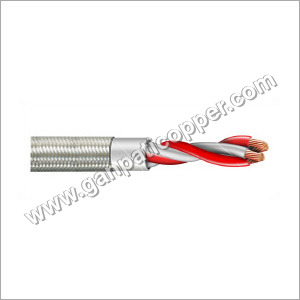
RTD Compensating Cables
Product Details:
- Install Type Indoor/Outdoor, Fixed & Flexible
- Cable Type Compensating cable for RTD
- Features High accuracy, Durable construction, Flexible, Flame retardant, Excellent electrical & thermal reliability, Resistant to oils and chemicals
- Conductor Type Stranded/Single Core
- Conductor Shape Round
- Core Number 2 to 4 cores
- Core Material Nickel plated copper, Pure copper
- Click to View more
RTD Compensating Cables Price And Quantity
- 100 Kilograms
- 950 INR
RTD Compensating Cables Product Specifications
- Approx. 7-12 kg/km (depends on type)
- Process Industries, Power Plants, Refineries, Chemical Plants, Measurement & Instrumentation
- -40°C to +80°C
- PVC, PTFE, Silicone Rubber
- PTFE/PVC/Silicone Rubber
- 2, 3, or 4 (as required)
- Standard and customized as per order
- 100 meters (customized lengths available)
- Plug/Socket optional as per requirement
- Standard Metallic/Color-coded as per DIN
- 300V
- 2000V AC/min
- -60°C to +200°C
- -60°C to +200°C
- Nickel Plated Copper, Pure Copper
- RTD Sensor connections, Temperature sensors, Thermocouple extension, Industrial instrumentation
- PTFE (Polytetrafluoroethylene), PVC
- Excellent mechanical strength
- Optional - Galvanized Steel
- 2.5 mm to 8 mm (varies by type and core)
- 2 to 4 cores
- Nickel plated copper, Pure copper
- Tinned Copper Braid
- 0.5 sq.mm, 1.0 sq.mm, Custom sizes available
- High-grade Copper + PVC/PTFE insulation
- Standard/As per customer requirement
- Typically 100-120 Ohm
- High accuracy, Durable construction, Flexible, Flame retardant, Excellent electrical & thermal reliability, Resistant to oils and chemicals
- Compensating cable for RTD
- Indoor/Outdoor, Fixed & Flexible
- Blue, Yellow, Green, Custom colors available
- RTD Compensating Cable
- Stranded/Single Core
- Round
- High resistance to acids, alkalis & oils
- Excellent (for outdoor application)
- Yes (as per IEC 60332-1)
- 0.5 mm to 2 mm (as per design)
- Up to 95% RH non-condensing
- >100 M/km at 500V DC
- Yes (RoHS Compliant)
- 10 times outer diameter
RTD Compensating Cables Trade Information
- As per demand Per Week
- 2-3 Days
Product Description
Specifications- Conductor : Solid, Multistrand, Copper Material (Bare Copper,nickel Plated Copper, Silver Plated Copper)
- Core Insulation : Ptfe Insulated
- Construction : Twisted
- Outer Jacket : Ptfe Sheathed
- Outer Braiding : Stainless Steel Wire Braiding
- Operating Temp : 260 °c
- Color Code : According To Din
Features
- Max. Temp. Up To 260°c
- Excellent Heat Resistant
- Outstanding Insulating Properties.
- High Mechanical Strength
- Good Thermal Stability
- Good Mechanical Strength
- Flame Retardant
- Passes Jss 51034 Flame Test
- Twisted / Shielded Pair
- Color Code As Per Customer Requirement
- Asbestos Braiding For Better Chemical & Heat Resistance Purpose
CONSTRUCTION DETAILS AND DIMENSIONS
| Cable Size | No.of Strands | Strand Diameter (Mm) | Area Of Conductor (Mm) | Bare Conductor Dia(Mm) | Formation | Cable Dimension(Mm) (Max) | Cable Wt (Approx) Gm/meter |
| Rt201 | 7 | 0.122 | 0.08 | 0.36 | Twisted | 2.9 | 11.6 |
| Rt202 | 7 | 0.152 | 0.12 | 0.45 | Twisted | 3.05 | 14.2 |
| Rt203 | 7 | 0.193 | 0.22 | 0.57 | Twisted | 3.37 | 20.2 |
| Rt204 | 7 | 0.274 | 0.42 | 0.81 | Twisted | 4.2 | 31.9 |
| Rt205 | 3 | 0.711 | 1.2 | 1.39 | Twisted | 5.5 | 75 |
| Rt206 | 7 | 0.200 | 0.14 | 0.48 | Twisted | 3.4 | 17.38 |
| Rt207 | 1 | 0.160 | 0.2 | 0.51 | Twisted | 3.4 | 17.5 |
| Rt208 | 7 | 0.510 | 0.45 | 0.82 | Twisted | 4.2 | 32.2 |
| Rt209 | 1 | 0.200 | 0.5 | 0.81 | Twisted | 4.2 | 33 |
| Rt210 | 7 | 0.274 | 0.5 | 0.9 | Twisted | 4.35 | 33 |
| Rt211 | 1 | 0.810 | 0.75 | 1.02 | Twisted | 4.6 | 48 |
| Rt212 | 14 | 0.300 | 1 | 1.26 | Twisted | 5.2 | 60 |
| Rt213 | 1 | 1.020 | 1.3 | 1.29 | Twisted | 5.3 | 78.1 |
| Rt214 | 19 | 0.300 | 1.3 | 1.52 | Twisted | 5.8 | 78.1 |
| Rt215 | 40 | 0.200 | 1.25 | 1.42 | Twisted | 5.6 | 75 |
| Rt216 | 21 | 0.300 | 1.5 | 1.55 | Twisted | 5.4 | 86 |
| Rt217 | 1 | 1.788 | 2.5 | 1.788 | Twisted | 6.34 | 140 |
| Rt218 | 56 | 0.300 | 4 | 2.53 | Twisted | 8.4 | 240 |
| Rt219 | 7 | 0.102 | 0.05 | 0.32 | Twisted | 2.6 | 9 |
Engineered for Diverse Industrial Applications
These RTD compensating cables are suitable for use in process industries, power plants, refineries, and chemical plants, offering optimized performance for temperature sensors and industrial instrumentation. Their adaptable design supports both indoor and outdoor use, whether in fixed or flexible installations, ensuring reliable signal transmission in demanding environments.
Reliable Flame and Chemical Resistance
Built to meet IEC 60332-1 standards, the cables incorporate flame retardant materials and high chemical resistance, making them safe for installations exposed to acids, alkalis, oils, and humidity up to 95% RH. This guarantees long-lasting durability and safety in process control and measurement systems.
Highly Customizable and Durable Construction
Available in various sizes, colors, and sheath thickness, the cables can be tailored to specific application needs. Choose between pure and nickel-plated copper conductors, multiple core options, and different insulation types for maximum compatibility. High mechanical strength and excellent insulation resistance make these cables a go-to solution for dependable operations.
FAQs of RTD Compensating Cables:
Q: How are RTD compensating cables with flame retardant properties used in industrial applications?
A: These cables are primarily used for connecting RTD sensors, temperature sensors, and for thermocouple extensions in industrial settings. Their flame retardant construction, high chemical resistance, and electrical reliability make them ideal for process industries, power plants, refineries, and chemical plants.Q: What benefits do the flame retardant and chemical resistant features offer?
A: Flame retardant properties (IEC 60332-1 compliant) enhance safety during fire incidents by minimizing flame spread, while high resistance to acids, alkalis, and oils protects cable integrity in harsh environments, reducing maintenance needs and increasing operational lifespan.Q: When should I choose a cable with UV resistance and high humidity resistance?
A: Select these cables when installation is outdoors or in environments subjected to high humidity (up to 95% RH non-condensing), as they maintain performance and insulation integrity even under strong sunlight and damp conditions.Q: Where are the cables typically installed?
A: These cables can be installed in both indoor and outdoor settings, supporting fixed or flexible configurations. Common installations include process industries, power generation plants, refineries, and locations requiring robust environmental resistance for instrumentation.Q: What is the process for customizing the cables according to technical requirements?
A: Cables can be tailored for sheath thickness, color, length, core number, insulation, and conductor type. After specifying the required properties (such as diameter, cable length, and insulation materials), manufacturers design and produce cables to meet those specific standards and applications.Q: How does the cable construction ensure high accuracy and durability?
A: Manufactured using high-grade copper with robust insulation (PTFE, PVC, or Silicone Rubber), these cables provide superior electrical and thermal reliability, high mechanical strength, and excellent flexibilityguaranteeing accurate signal transmission and long-term operational stability.Q: What are the advantages of using lead-free, RoHS compliant RTD compensating cables?
A: Lead-free, RoHS compliance ensures the cables meet environmental and safety regulations, resulting in safer installation, reduced hazardous material exposure, and easier integration into global projects requiring strict compliance.
Price:
- 50
- 100
- 200
- 250
- 500
- 1000+

Other Products in 'RTD Cable' category


- C-27, Bais Godam Industrial Estate, Bais Godam, Jaipur - 302006, Rajasthan, India
- Phone : 08045802792
GST : 08AABFG6654R1ZQ

- Mr Anup Gupta (Partner)
- Mobile : 08045802792
- Send Inquiry
- Mobile no :-919414048492
 Send Inquiry


Developed and Managed by Infocom Network Private Limited.

